Facilitation Lab June 2026: What Happens When Facilitators Play Games Together
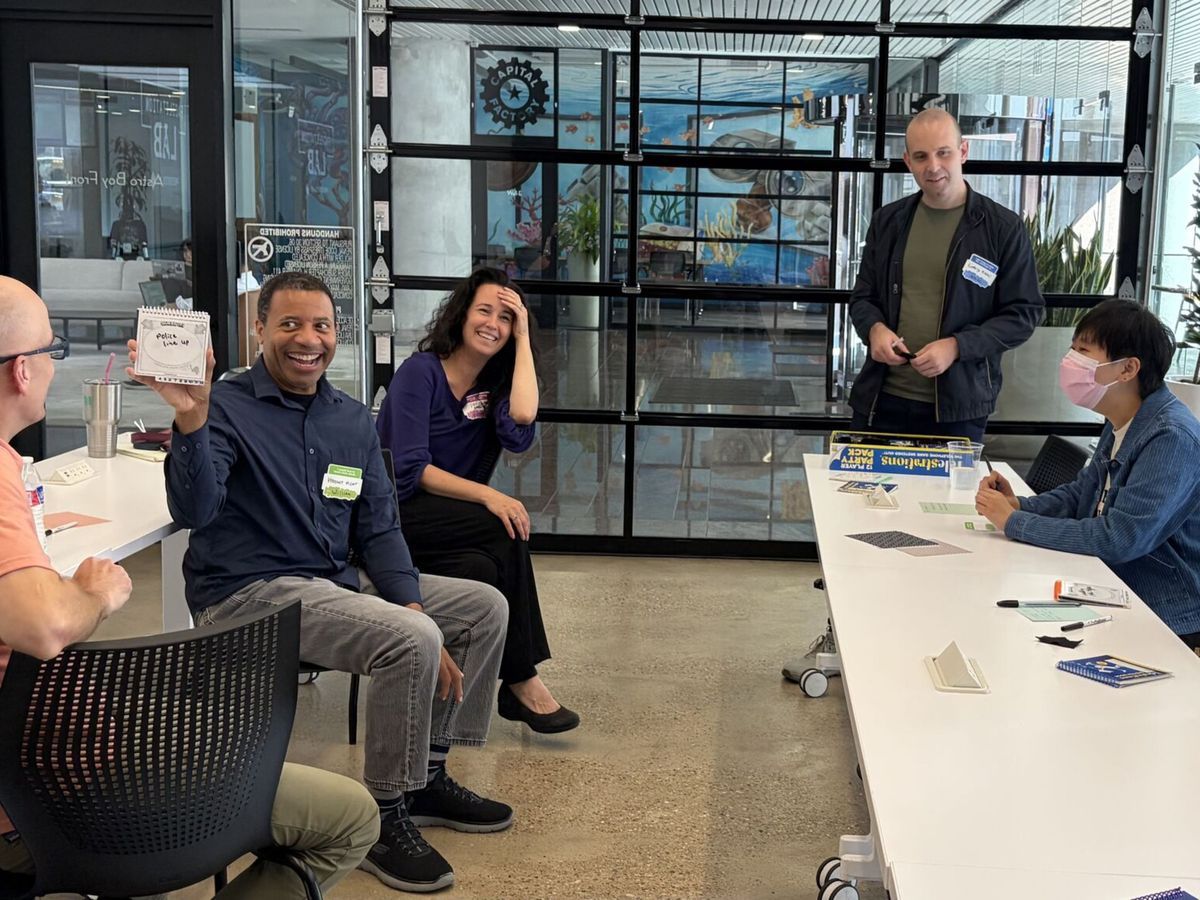
This month's Facilitation Lab explored connection through play. Four facilitators each brought a game, creating a refreshing change of pace from the usual facilitation exercises. The room was alive with movement, laughter, competition, and collaboration.
As we debriefed at the end of the evening, three insights stood out:
The game's value comes alive in the debrief.
Each game allowed players to experience a core theme such as collaboration, consensus, support, or competition.
We left with four new facilitation tools and ideas for where they might fit in professional settings.
Collaborative Drawing
Will Dahl facilitated a collaborative drawing game. Participants alternated between drawing a word and interpreting someone else's drawing as notebooks moved around the circle.
The key insight? Meaning changes as it travels. Each participant built on imperfect information, much like teams do every day.
Tiger, Alien, Salesman
Greg Snyder facilitated this consensus-building game. Participants attempted to reach consensus on Tiger, Alien, or Salesman without discussing it beforehand. Smaller groups aligned quickly while the larger group took more time.
A few insights emerged:
Demonstrating an activity is often more effective than explaining it.
Consensus becomes more complex as groups grow.
The debrief surfaced the tradeoffs between alignment and independent thinking.
Supported Balance
I facilitated this exercise where participants first balanced solo, then explored using support, including furniture and other people.
Here's what I noticed:
Social norms form quickly. The first few participants chose furniture and walls for support, and others followed their lead.
While everyone could do the poses alone, the conversation explored how support can make challenges more easeful and more enjoyable. But also more complicated!
Participants explored how the activity might be adapted for different bodies, abilities, and comfort levels.
Rock-Paper-Scissors Relay
Nicole Richard facilitated this high-energy game. Two teams raced challengers toward one another, meeting in the middle for Rock-Paper-Scissors while teammates cheered them on.
We discovered that team competition created shared identity quickly. Nicole demonstrated how facilitators can use contrast to shift energy and maintain engagement. And participants discussed how a simple storyline could increase emotional investment.
Closing Reflection
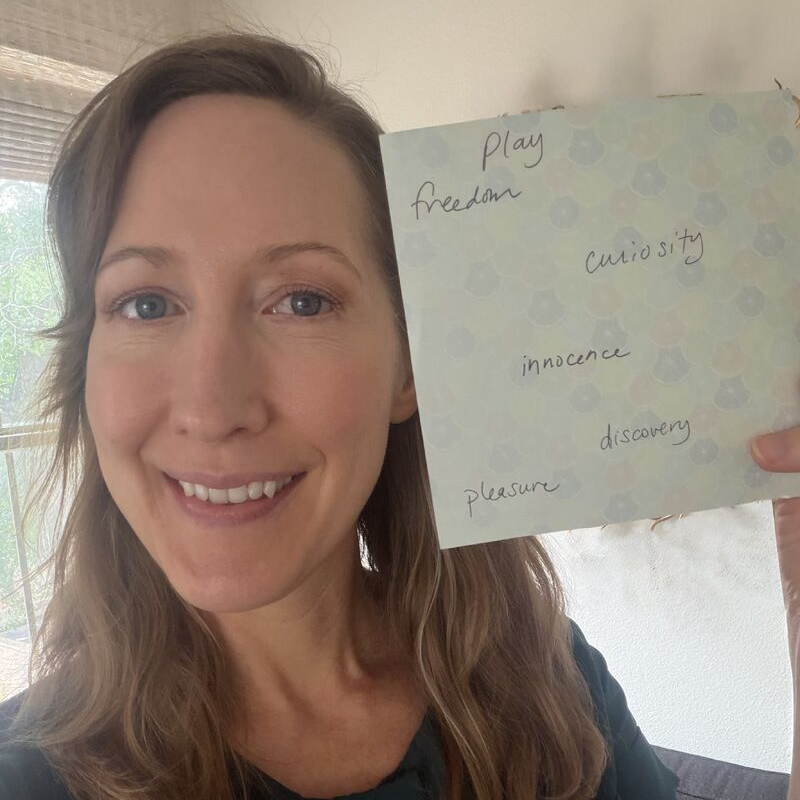
Melissa Lau invited us to reflect on how we might bring play into our facilitation practice as a result of this session.
Three big takeaways:
The activity creates the experience. The debrief creates the learning.
Play can surface meaningful conversations about collaboration, leadership, support, competition, and group dynamics.
Every game contains a deeper pattern waiting to be explored. The facilitator's role is to help participants notice it.
Play isn't just about fun. It's a powerful tool for helping groups connect, learn, and grow together.
Join us for the next Facilitation Lab Austin on July 7. Come learn, experiment, and play!